
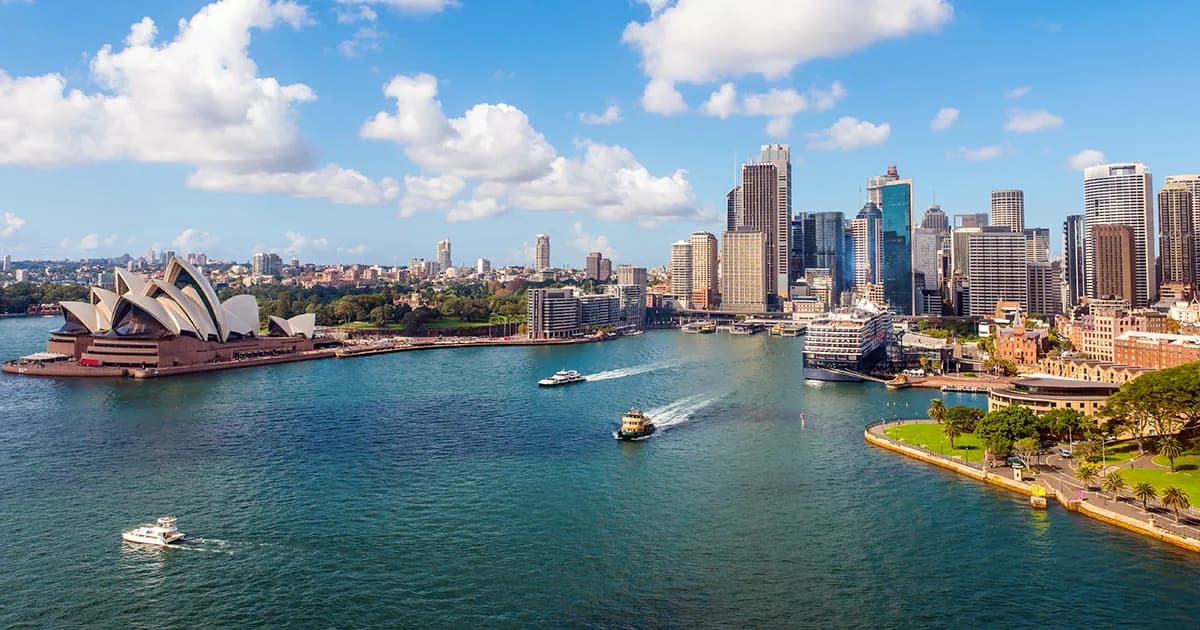
 Oceania destination
Australia
A points-based PR system, strong graduate work rights, and cities that rank among the world's best to live in.
Overview
Australia sells itself on a simple promise: study or work here, play by clear rules, and permanent residence is a realistic outcome rather than a lottery ticket. The points system for skilled migration is published in full, invitation rounds are announced, and the occupations in demand are listed for everyone to see. Indians are already one of the largest migrant communities in the country, concentrated in Sydney, Melbourne, Brisbane and Perth, which means new arrivals find familiar food, festivals and support networks within days of landing.
Education is the most travelled route in. Australian universities run two intakes a year and the Subclass 500 student visa carries straightforward work rights during study. After graduation, the Temporary Graduate visa (Subclass 485) lets students live and work for two to four years depending on the qualification, and that Australian work experience converts directly into points for the Subclass 189 or 190 permanent visas. Regional study adds further advantages, with extra points and longer post-study stays for graduates outside the big cities.
The work side runs on sponsorship and independent skilled visas in parallel. Employers across healthcare, construction, IT and hospitality sponsor overseas workers, while the independent points-tested visa needs no employer at all. Cost of living is the honest caveat: Sydney and Melbourne rents are high, and applicants need to budget carefully, but minimum wages are also among the highest in the world, which balances the equation for working students and graduates.
65 points
Minimum points to lodge an Expression of Interest for skilled visas
2-4 years
Post-study work rights on the Subclass 485 graduate visa
800K+
People of Indian origin in Australia, among the fastest-growing communities (approx.)
Opportunities
Where Australia makes sense for Indians
Degrees with two to four years of post-study work
The Subclass 485 visa lets graduates work unrestricted after their studies, with longer durations for master's and PhD holders and extra time for regional graduates.
Independent skilled migration without a sponsor
The Subclass 189 points-tested visa needs no employer or state nomination, just a competitive points score in an occupation on the skilled list.
Employer-sponsored roles in shortage sectors
Nurses, aged-care workers, engineers, tradespeople and chefs are sponsored regularly, with pathways from temporary sponsorship to permanent residence.
Regional Australia advantages
Studying or working in designated regional areas brings extra PR points, additional post-study work time and access to dedicated regional visa streams.
Visa routes
Visa categories we handle for Australia
Student Visa (Subclass 500)
For full-time study at a registered Australian institution. Requires a Confirmation of Enrolment (CoE), proof of funds, English scores and a genuine student statement.
Temporary Graduate Visa (Subclass 485)
Allows recent graduates to live and work in Australia for two to four years depending on qualification level, with extended stays for regional graduates.
Skilled Independent Visa (Subclass 189)
A points-tested permanent visa needing no sponsor. Applicants submit an Expression of Interest and the highest-ranked candidates in each round are invited.
Skilled Nominated Visa (Subclass 190)
A permanent visa with state or territory nomination, which adds five points. Each state publishes its own occupation list and nomination criteria.
Temporary Skill Shortage (Subclass 482)
Employer-sponsored temporary work visa for occupations on the skilled lists, with streams leading to permanent residence after a qualifying employment period.
Visitor Visa (Subclass 600)
For tourism, family visits and short business trips, usually granted for stays of up to three, six or twelve months.
Study in Australia
Universities, costs and SOP guidance
Real universities with official links, rough tuition figures marked approx., and statement-of-purpose advice shaped for Australia.
Universities to know
Popular courses
Rough study costs
Bachelor’s · per year
AUD 30,000 – 55,000 per year (approx.)
Master’s · per year
AUD 32,000 – 60,000 per year (approx.)
The student visa requires proof of around AUD 29,710 per year for living costs on top of tuition; Sydney and Melbourne rents are the highest in the country (approx.).
Essay & SOP guidance
- Show a logical academic progression: the course should clearly build on your previous studies or work, which is also what the Genuine Student assessment looks for.
- Explain why this course and provider, naming specific subjects, industry placements or facilities that match your career goals.
- Describe a realistic career plan connected to your home country. The essay should read as a study plan, not a migration pitch.
- Address funding credibly: explain the source of tuition and living-cost money and keep your statements consistent with your visa application answers.
- Keep the tone honest and specific. Generic praise of Australia's lifestyle adds nothing; concrete course details and a clear plan carry the weight.
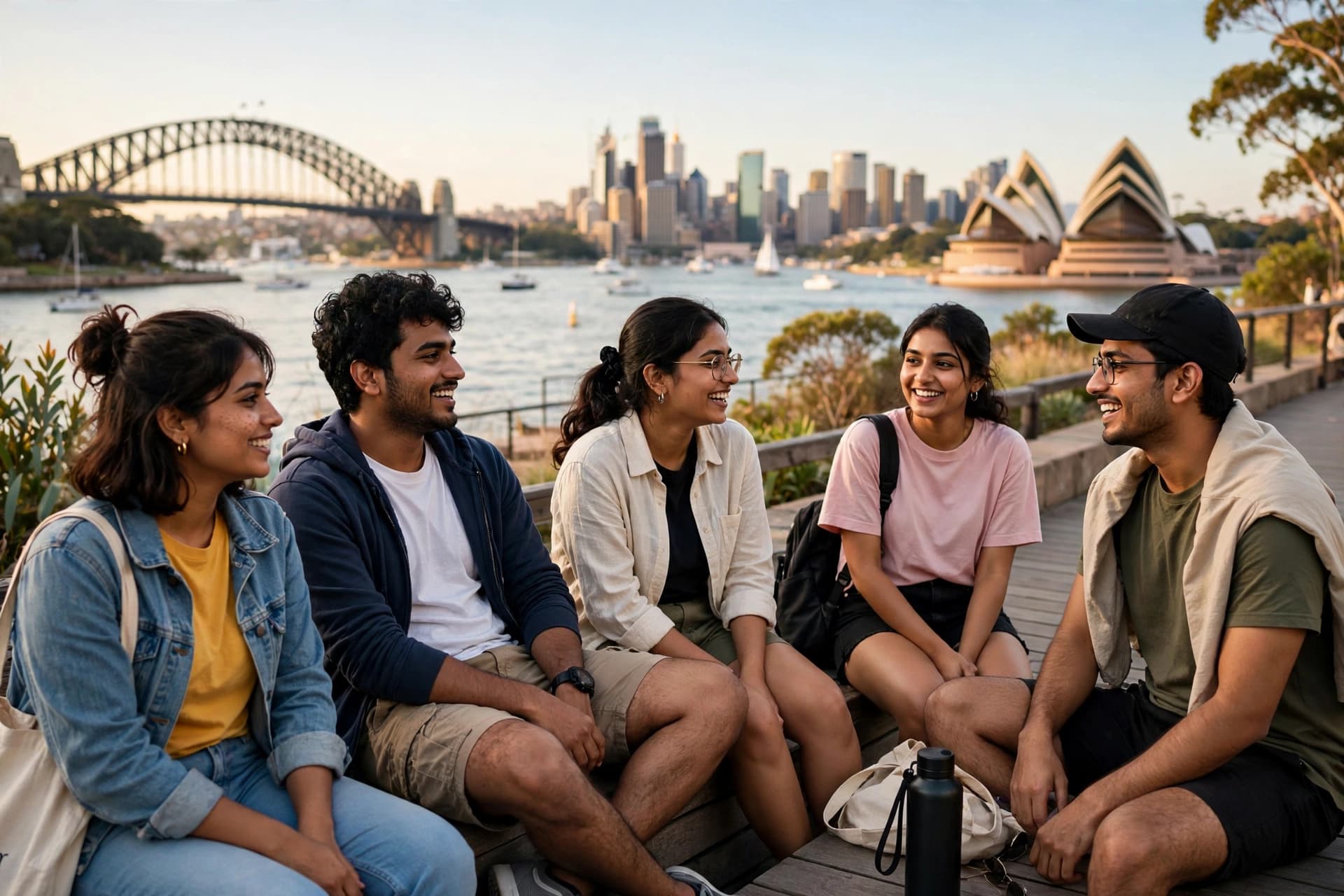
Life in Australia
Beyond the visa: settling in
A visa gets you to Australia. Our pre-departure briefings cover the rest: the practical groundwork of your first month, explained before you board.
- Housing: what to arrange before you fly and what to sort after landing
- Money: forex, international cards and opening a local bank account
- Health cover and insurance requirements for your visa type
- Local essentials: transport, connectivity and emergency contacts
Eligibility
What you generally need
- English: IELTS usually around 6.0 to 7.0 overall for student visas depending on the course; skilled visas need at least competent English, roughly IELTS 6.0 in each band, with higher scores earning more points.
- Funds: student applicants generally need to show around AUD 29,710 per year for living costs plus tuition and travel, in addition to the first year's tuition fees.
- Skills assessment: skilled migration requires a positive assessment from the relevant Australian assessing authority for your occupation, which can take several weeks to months.
- Points test: Subclass 189 and 190 need a minimum of 65 points, but actual invitation cut-offs are usually higher, often 80 to 90 for popular occupations.
- Age: skilled points-tested visas require applicants to be under 45 at the time of invitation.
- Health and character: medical examinations and police clearances from every country of residence are mandatory for permanent visas.
Process
How we take your file forward
Points and eligibility check
We calculate your likely points score across age, English, education, experience and partner factors, and compare it against recent invitation rounds to judge whether 189, 190 or an employer route fits.
Skills assessment and English test
The assessing authority application and IELTS or PTE booking run in parallel. We prepare the employment evidence the assessors expect, since a negative assessment stalls everything.
Expression of Interest and state nomination
Your EOI is lodged in SkillSelect and state nomination applications are prepared where they add points or open a dedicated stream.
Visa lodgement
Once invited, the visa application is filed with complete documentation within the deadline. Australian case officers decide each case on its merits; a complete file with no gaps is the strongest thing a consultant can deliver.
Student route: CoE and Genuine Student requirement
For students we manage university applications, the CoE process and the genuine student statement, which must explain the course choice and ties to India convincingly.
Pre-departure and settlement planning
TFN application, Medicare eligibility, Overseas Student Health Cover, accommodation and banking. Regional migrants get extra guidance on the conditions attached to regional visas.
FAQ
Australia, answered
It varies with your points score. High-scoring candidates in priority occupations can be invited within a few rounds of lodging an EOI, while lower scores may wait many months or need state nomination. The visa processing itself after invitation usually takes several months.
Tuition typically runs AUD 25,000 to AUD 45,000 per year. With living costs of roughly AUD 29,710 per year plus OSHC, visa fees and airfare, families should plan around Rs. 25 to Rs. 45 lakh per year depending on the city and course.
Yes. Partners and dependent children can be included in most skilled and student visa applications. A partner with competent English and a skills assessment can also add valuable points to your score.
Yes, the Department of Home Affairs accepts PTE Academic alongside IELTS, TOEFL and other approved tests. Many Indian applicants choose PTE for its faster results and computer-based format.
Then the points-tested route is closed for now, but employer sponsorship or the student route may still work. Lists are reviewed periodically, so we also track upcoming changes that could reopen options.

Free initial consultation
Australia on your mind? Let's check your eligibility.
A free consultation reviews your profile against Australia's actual requirements and tells you honestly where you stand. No obligation, no sales pitch.