
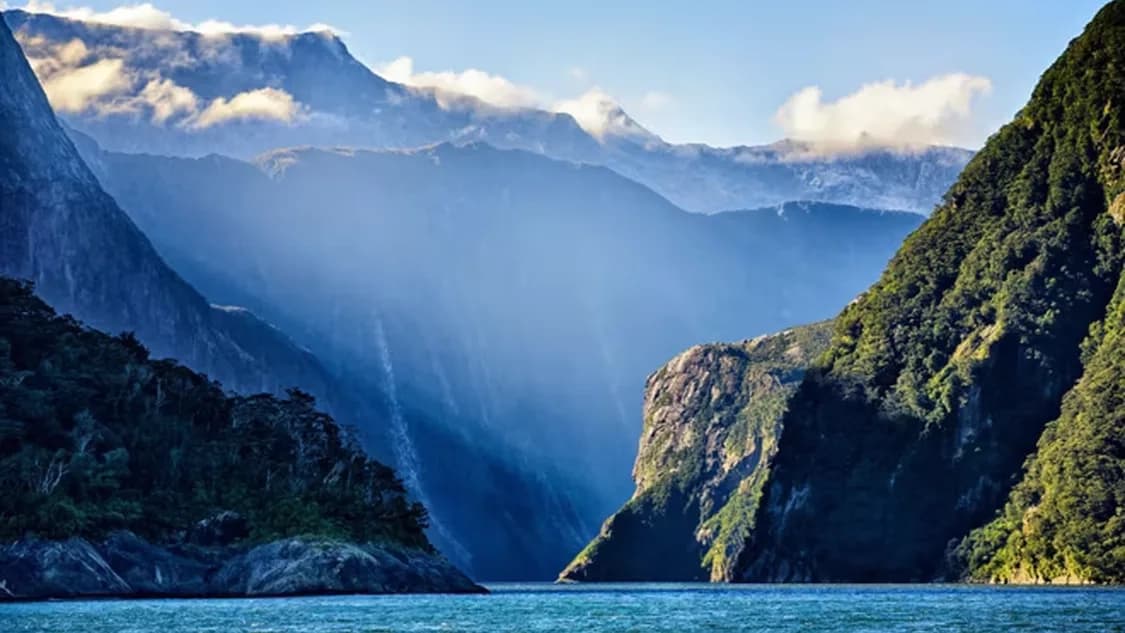
 Oceania destination
New Zealand
Smaller classes, a calmer pace of life, and a residence system that rewards skilled migrants.
Overview
New Zealand does not try to compete with Australia on size, and that is precisely its appeal. Class sizes are smaller, cities are compact enough to cross in twenty minutes, and the outdoors is never more than a short drive away. For Indian families weighing where a child will actually be happy for three or four years, those quality-of-life factors carry real weight. The Indian community is well established in Auckland, Hamilton and Christchurch, and the country's education system is fully government-regulated, which keeps standards consistent across institutions.
Immigration here runs on clarity. The Green List names the occupations New Zealand considers hard to fill, from registered nurses and teachers to engineers and ICT professionals, and people in those roles get a faster route to residence. Students who complete eligible qualifications can apply for a Post-Study Work Visa of up to three years, and time spent working in skilled employment feeds into residence applications. Tuition is generally lower than in Australia or the UK, which makes the total budget easier for middle-class families to manage.
There are honest limitations to know. The job market is small, so graduates in oversupplied fields can take longer to find skilled work. Wages are decent but the cost of housing in Auckland is high relative to incomes. We raise these points in the first meeting itself, because New Zealand suits applicants who value lifestyle and a clear residence pathway over the scale of opportunity in bigger economies.
3 years
Maximum Post-Study Work Visa length for degree graduates (approx.)
NZD 20,000
Yearly living-cost funds required for a student visa (approx.)
250K+
People of Indian origin in New Zealand, a fast-growing community (approx.)
Opportunities
Where New Zealand makes sense for Indians
Study with up to three years of post-study work
Graduates of eligible bachelor's degrees and above can get an open Post-Study Work Visa, giving real time to find skilled employment without needing a sponsor immediately.
Green List fast-track residence
Nurses, midwives, teachers, engineers and ICT specialists on the Green List can move to residence quickly, some straight to residence from offshore.
Skilled Migrant Category residence
The points-based residence system for skilled workers with New Zealand job offers or relevant experience, recently rebalanced to favour higher-skilled roles.
Agriculture, construction and hospitality work
Accredited employers in dairy, construction and tourism sponsor overseas workers regularly, and these sectors have historically welcomed Indian workers.
Visa routes
Visa categories we handle for New Zealand
Student Visa
For full-time study at an approved education provider. Applicants need an offer of place, proof of funds of around NZD 20,000 per year for living costs, and must meet health and character requirements.
Post-Study Work Visa
An open work visa for graduates of eligible New Zealand qualifications, granted for one to three years depending on the level and location of study.
Skilled Migrant Category Resident Visa
Points-based residence for skilled workers, weighing qualifications, skilled work experience, income level and New Zealand employment.
Accredited Employer Work Visa (AEWV)
The main temporary work visa, requiring a job offer from an accredited employer at or above the median wage threshold for most roles.
Straight to Residence (Green List Tier 1)
For occupations in critical shortage, allowing eligible professionals to apply for residence without first working in New Zealand.
Visitor Visa
For tourism and family visits, generally granted for up to nine months in an eighteen-month period for genuine visitors.
Study in New Zealand
Universities, costs and SOP guidance
Real universities with official links, rough tuition figures marked approx., and statement-of-purpose advice shaped for New Zealand.
Universities to know
Popular courses
Rough study costs
Bachelor’s · per year
NZD 28,000 – 42,000 per year (approx.)
Master’s · per year
NZD 30,000 – 45,000 per year (approx.)
The student visa requires proof of around NZD 20,000 per year for living costs on top of tuition; Auckland rents run higher than smaller cities (approx.).
Essay & SOP guidance
- Explain why New Zealand specifically, not just any English-speaking country: name the qualification, the institution, and how it connects to your career plan.
- Immigration New Zealand looks for genuine student intent. Show a logical academic progression — the course should build on what you have already studied or worked in.
- Address funds honestly: explain the source of tuition and living-cost money (savings, loan, sponsor) rather than leaving large unexplained deposits.
- Keep it personal and specific. Name modules, faculty research areas or industry links that attracted you; generic praise of the country's scenery adds nothing.
- Close with a post-study plan that fits the rules, such as applying for the Post-Study Work Visa in a skilled role related to your field.
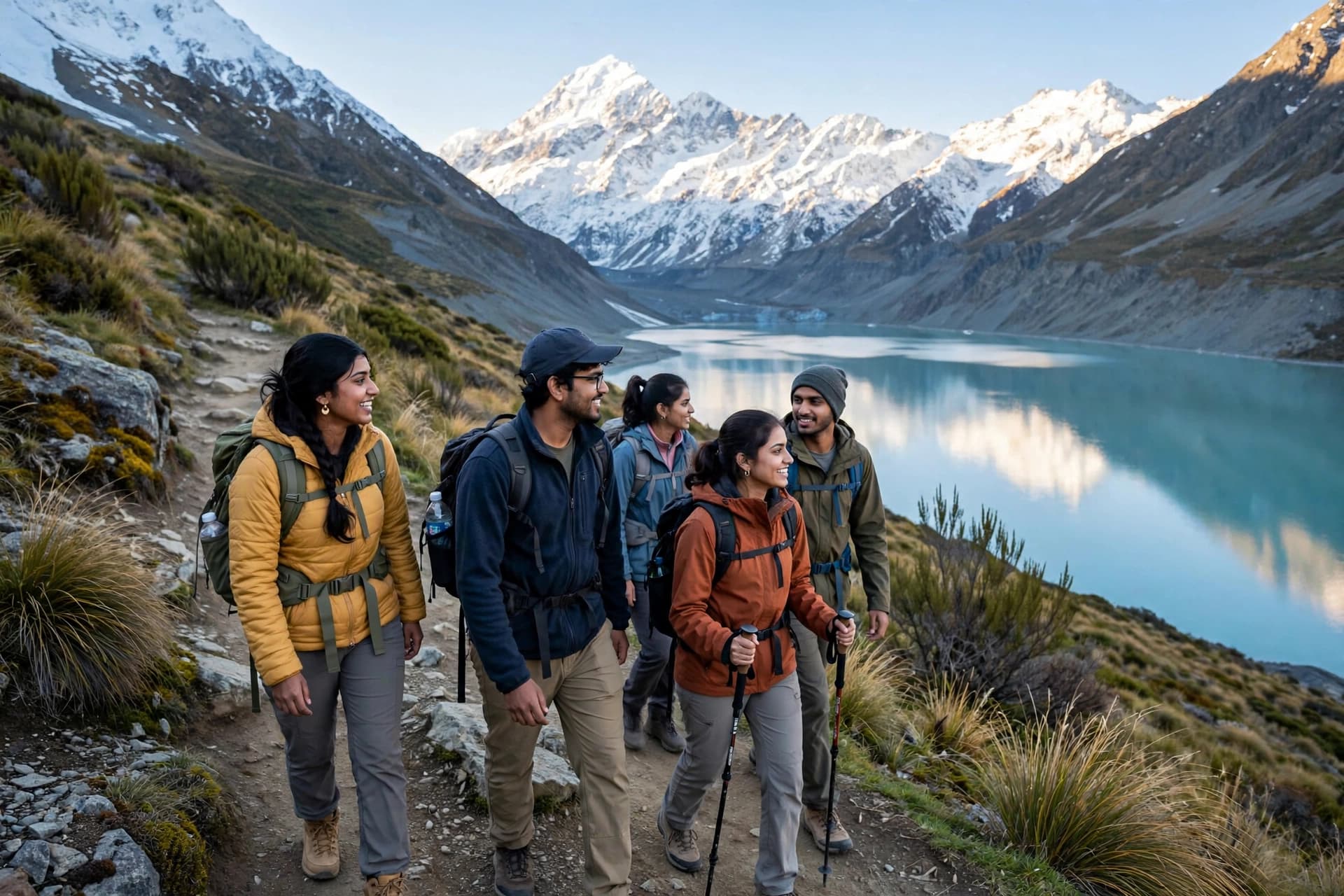
Life in New Zealand
Beyond the visa: settling in
A visa gets you to New Zealand. Our pre-departure briefings cover the rest: the practical groundwork of your first month, explained before you board.
- Housing: what to arrange before you fly and what to sort after landing
- Money: forex, international cards and opening a local bank account
- Health cover and insurance requirements for your visa type
- Local essentials: transport, connectivity and emergency contacts
Eligibility
What you generally need
- Funds: usually around NZD 20,000 per year for living costs plus tuition, shown through bank statements or a loan sanction letter.
- English: IELTS usually around 6.0 to 6.5 overall for student visas; skilled residence routes need higher scores for points, roughly IELTS 6.5+ in each band for maximum benefit.
- Qualifications: degrees assessed against New Zealand standards; some occupations need registration with the local professional body, such as the Nursing Council.
- Job offer: the AEWV and Skilled Migrant routes need a genuine offer from an employer, accredited in the case of the AEWV, at the required wage level.
- Health and character: chest X-rays and medicals for longer stays, plus police certificates from India and other countries of residence.
- Age: the Skilled Migrant Category generally requires applicants to be 55 or under.
Process
How we take your file forward
Suitability assessment
We check your occupation against the Green List and skilled occupation settings, estimate your residence points, and give a straight answer on whether New Zealand fits your goals or whether Australia or Canada would serve you better.
Institution and employer research
For students, shortlisting approved providers with strong graduate outcomes in your field. For workers, verifying employer accreditation and the wage threshold for your role.
Documentation and medicals
Fund statements, qualification documents, police clearances and panel-physician medicals are organised early, since medical referrals are a common cause of delay.
Application lodgement
The student, work or residence application is filed through Immigration New Zealand's online system with a complete evidence set. As with every country, the immigration officer makes the final call; thorough preparation is what we contribute.
Job search guidance for graduates
New Zealand's market rewards local networking. We brief graduates on how hiring works here, from CV format to the importance of the first local reference.
Pre-departure briefing
IRD numbers, bank accounts, tenancy basics, driving licence conversion and health insurance, plus realistic budgeting for Auckland versus smaller cities.
FAQ
New Zealand, answered
Tuition for international bachelor's degrees usually runs NZD 25,000 to NZD 40,000 per year, with master's programs in a similar band. Including living costs of around NZD 20,000 per year, families should budget roughly Rs. 22 to Rs. 40 lakh annually.
After an Expression of Interest is selected, residence processing typically takes several months. The bigger variable is reaching the selection threshold, which depends on your points, so building English scores and skilled experience first shortens the real timeline.
Partners of students in eligible postgraduate programs can generally get work visas with open conditions. For undergraduate students, partner work rights are more limited, so we check the current rules for your exact situation.
Auckland and Hamilton have reasonable casual job markets in retail, hospitality and warehousing, but competition exists and smaller towns have fewer openings. Students should arrive with enough funds to survive several months without work.
We request the case notes, fix the identified weakness, and reapply. Common issues are fund documentation and doubts about genuine intent. No consultant can promise approval; Immigration New Zealand decides every case independently.

Free initial consultation
New Zealand on your mind? Let's check your eligibility.
A free consultation reviews your profile against New Zealand's actual requirements and tells you honestly where you stand. No obligation, no sales pitch.