
 Middle East destination
Saudi Arabia
Vision 2030 megaprojects are creating demand for skilled Indians at an unprecedented scale.
Overview
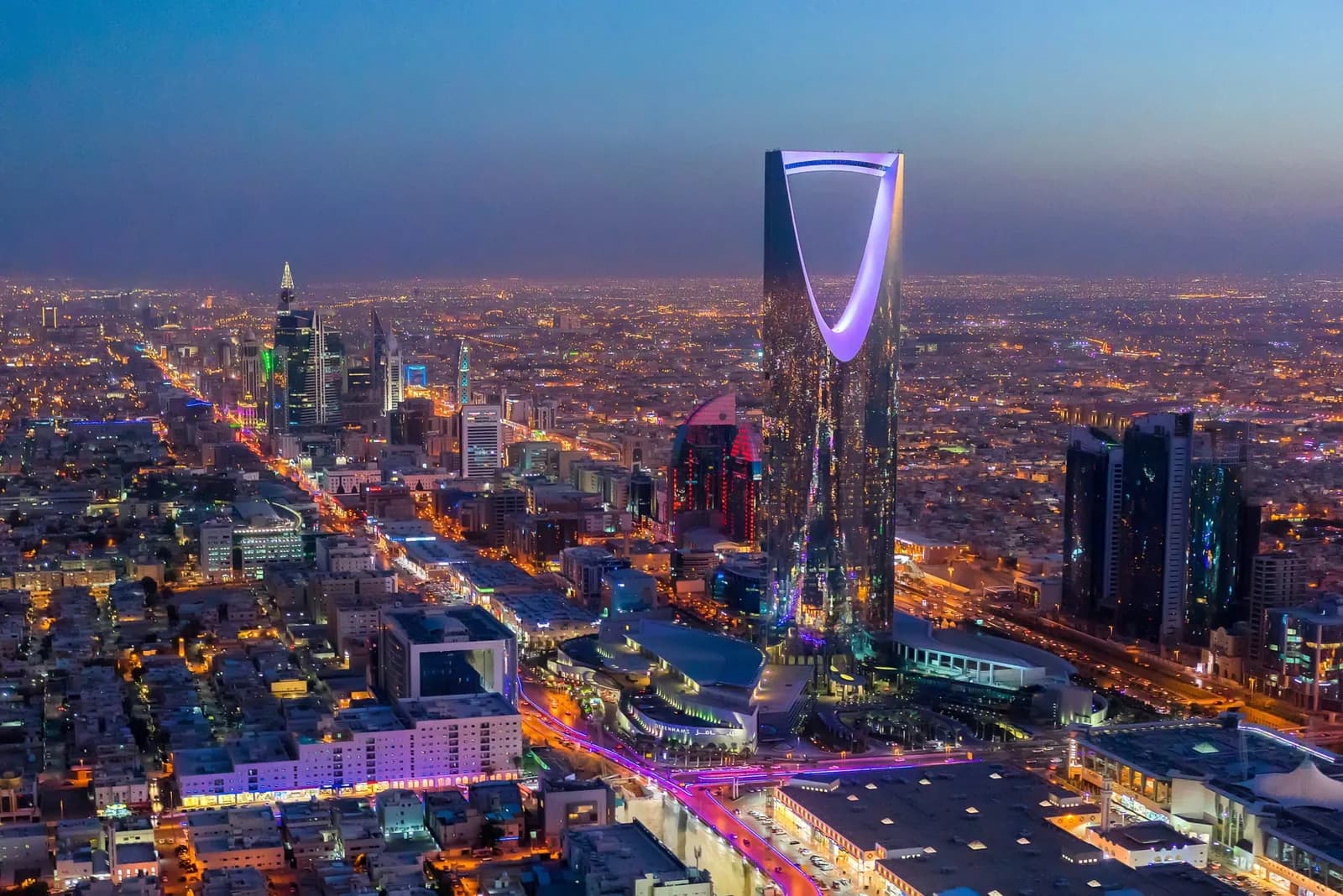
Saudi Arabia is in the middle of the most ambitious construction and diversification program on the planet. NEOM, the Red Sea resorts, Qiddiya's entertainment city and a rebuilt Riyadh are not brochures; they are active sites employing hundreds of thousands of people. Indian engineers, project managers, hospitality staff, healthcare workers and tradespeople are being recruited in large numbers, and salaries are tax-free. For skilled Indians, this is the Gulf opportunity with the most momentum behind it right now.
The work model will feel familiar to anyone who knows the Gulf: an employer sponsors your work visa, you complete medicals, and the Iqama residence permit follows after arrival. What has changed is the social environment. The Kingdom has opened considerably in recent years, with cinemas, concerts, restaurants and tourist visas that did not exist a decade ago. Jeddah, Riyadh and Dammam now host large, settled Indian communities with schools, supermarkets and cultural associations.
Two things deserve straight talk. First, verify every offer: the scale of hiring has attracted fraudsters selling fake Saudi jobs, and we check employer credentials before advising any client. Second, understand the contract fully, including end-of-service benefits, housing, and exit procedures. Done properly, a Saudi posting builds savings faster than almost any other option available to mid-career Indian professionals.
2.5M+
Indian nationals living and working in Saudi Arabia (approx.)
$1T+
Scale of announced Vision 2030 giga-project investment (approx.)
0%
Personal income tax on salaries in Saudi Arabia
Opportunities
Where Saudi Arabia makes sense for Indians
Megaproject construction and engineering
Civil engineers, project planners, surveyors, HSE officers and skilled trades are in sustained demand across NEOM, Red Sea and Riyadh developments.
Healthcare expansion
New hospitals and medical cities need Indian doctors, nurses, technicians and pharmacists, with licensing through the Saudi Commission for Health Specialties.
Hospitality and tourism growth
New resorts, hotels and entertainment venues are hiring chefs, front-office staff, housekeeping teams and event managers as tourism opens up.
IT and digital transformation roles
Banks, government entities and large contractors are digitising fast, creating openings for software professionals, cybersecurity staff and data specialists.
Visa routes
Visa categories we handle for Saudi Arabia
Work Visa and Iqama
The standard employment route: a Saudi employer secures a work visa, the employee enters, completes medicals, and receives the Iqama residence permit tied to the sponsor.
Premium Residency
A long-term residence scheme for investors, exceptional professionals and property owners, offering residence without a Saudi sponsor, in limited and unlimited duration options.
Business Visit Visa
For meetings, negotiations and site visits, often arranged through a Saudi host company or issued to business travellers meeting eligibility criteria.
Family Visit and Residence Visas
Workers in qualifying professions and salary bands can bring families for visits or long-term residence, subject to employer and government approvals.
Tourist e-Visa
Saudi Arabia now issues tourist visas to Indian nationals, valid for multiple entries, opening leisure travel to AlUla, Jeddah and Riyadh.
Hajj and Umrah Visas
Dedicated pilgrimage visas arranged through approved channels, separate from work and tourist categories, with specific seasons and quotas.
Study in Saudi Arabia
Universities, costs and SOP guidance
Real universities with official links, rough tuition figures marked approx., and statement-of-purpose advice shaped for Saudi Arabia.
Universities to know
Popular courses
Rough study costs
Bachelor’s · per year
SAR 20,000 – 60,000 per year at private universities; public universities charge modest fees for international students (approx.)
Master’s · per year
SAR 30,000 – 80,000 per year at private institutions (approx.)
KAUST funds admitted graduate students fully (tuition plus stipend); many undergraduate programs are taught in Arabic, so confirm English-taught availability before applying (approx. living costs SAR 2,000 – 3,500 per month).
Essay & SOP guidance
- Align your statement with Vision 2030 sectors — energy transition, AI, tourism, construction and finance. Saudi universities and sponsors fund students who fit national priorities.
- For KAUST and KFUPM graduate programs, your research statement matters more than a generic SOP: name the labs, faculty and problems you want to work on.
- Be honest about language. If the program is English-taught, say so and give your IELTS/TOEFL score; if Arabic-taught, show a realistic plan to learn it.
- Keep the tone professional and modest. Saudi academic culture values respect for the institution and clear purpose over dramatic personal narratives.
- Document your funding route explicitly — self-funded, family-funded, or scholarship — since visa and admission both hinge on proven finances.
Life in Saudi Arabia
Beyond the visa: settling in
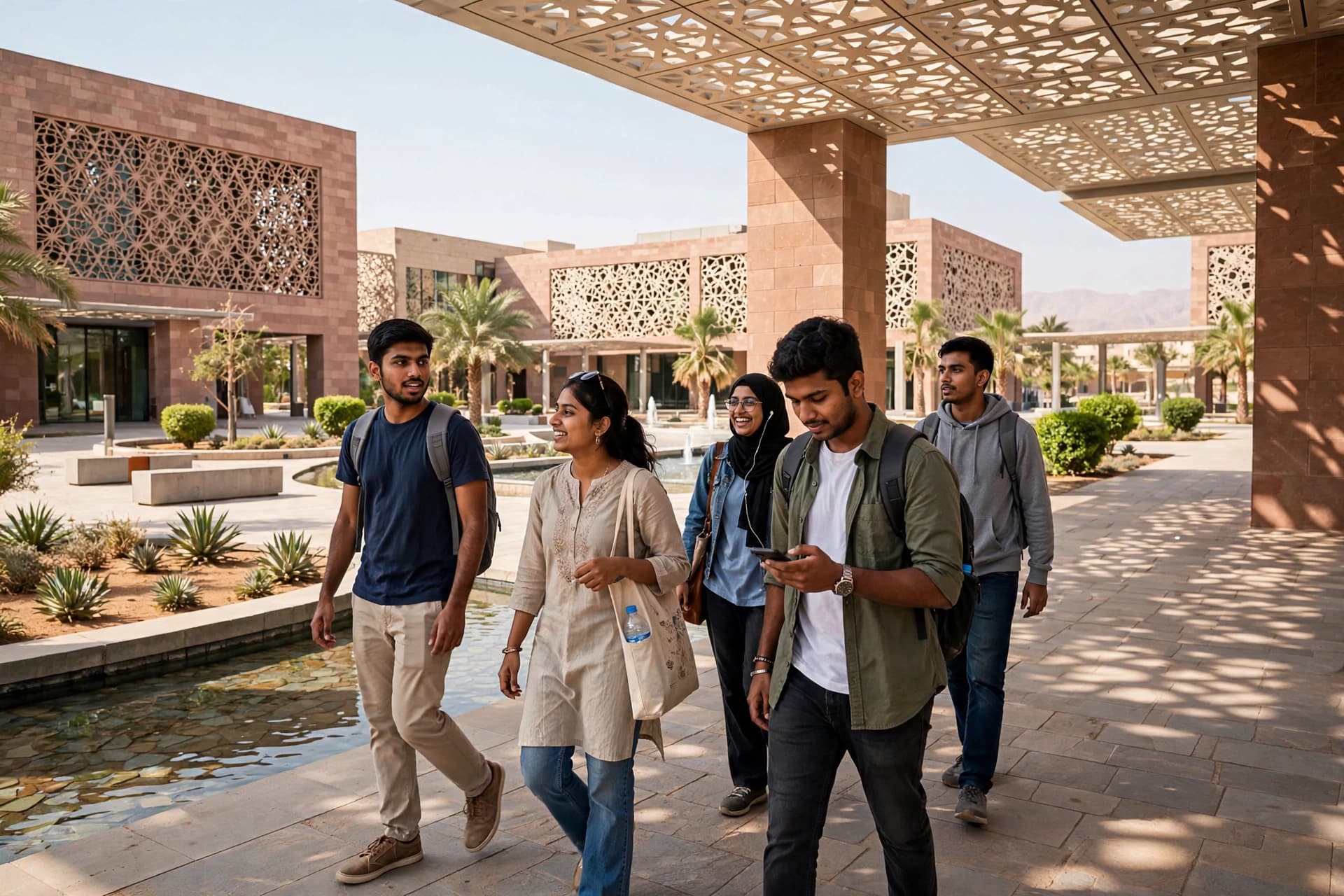
A visa gets you to Saudi Arabia. Our pre-departure briefings cover the rest: the practical groundwork of your first month, explained before you board.
- Housing: what to arrange before you fly and what to sort after landing
- Money: forex, international cards and opening a local bank account
- Health cover and insurance requirements for your visa type
- Local essentials: transport, connectivity and emergency contacts
Eligibility
What you generally need
- Confirmed employer sponsorship: the work visa requires a genuine Saudi employer with an approved visa quota; never travel on a visit visa expecting to convert it to work.
- Attested documents: degrees and professional certificates need Saudi embassy attestation after MEA stamping; some professions need additional Saudi licensing.
- Medical fitness: pre-departure and post-arrival medicals are mandatory, with strict standards on communicable diseases.
- Age: generally 21 to 60 for work visas, with some variation by profession and employer policy.
- Profession matching: the visa profession should match your actual role, as mismatches cause problems with licensing, banking and family sponsorship.
- Clean record: police clearance may be requested, and previous deportations from GCC countries must be disclosed.
Process
How we take your file forward
Employer and offer verification
We verify the Saudi company's commercial registration, the authenticity of the job offer, and that the visa profession matches the actual role. This step has saved many clients from fraudulent agents.
Attestation and licensing
Educational and professional documents go through MEA and Saudi embassy attestation. Doctors, nurses and engineers start their Saudi licensing applications in parallel.
Visa stamping
The work visa is stamped at the Saudi mission or through the authorised process after the employer's approvals. We prepare the complete file so stamping is not delayed.
Travel and arrival formalities
We brief you on the employment contract, salary payment norms, accommodation arrangements and the medical and Iqama process that follows arrival. The Saudi authorities issue the final permits; our role is preparation and guidance.
Iqama and dependent procedures
After the Iqama is issued, eligible professionals can start family residence applications. We advise on timelines, salary requirements and school options in your city.
Contract and exit awareness
Understanding end-of-service benefits, notice periods, and final exit procedures before you need them. Workers who know their contract terms avoid most disputes.
FAQ
Saudi Arabia, answered
Yes, there is no personal income tax in Saudi Arabia. Combined with employer-provided housing or allowances in many contracts, savings potential is high. India-side tax residency rules still apply, so keep records of your days in each country.
Ask for the company's commercial registration number, verify the offer letter details against the visa issued, and never pay large sums for the job itself. Genuine employers bear the visa costs. We run these checks for every client before advising them to proceed.
Yes. Women work across healthcare, education, hospitality, retail and corporate roles, and recent reforms have expanded their participation significantly. Contracts and housing arrangements should be confirmed in writing before travel.
Professionals in eligible categories and salary bands can sponsor families for residence. Processing involves employer cooperation and government approvals, and timelines vary, so we set expectations based on your specific case.
It grants long-term residence without a Saudi sponsor to qualifying investors, property owners and exceptional professionals. The financial thresholds are substantial, so it suits a small segment, but for those who qualify it offers unusual stability in the Gulf.


Free initial consultation
Saudi Arabia on your mind? Let's check your eligibility.
A free consultation reviews your profile against Saudi Arabia's actual requirements and tells you honestly where you stand. No obligation, no sales pitch.