
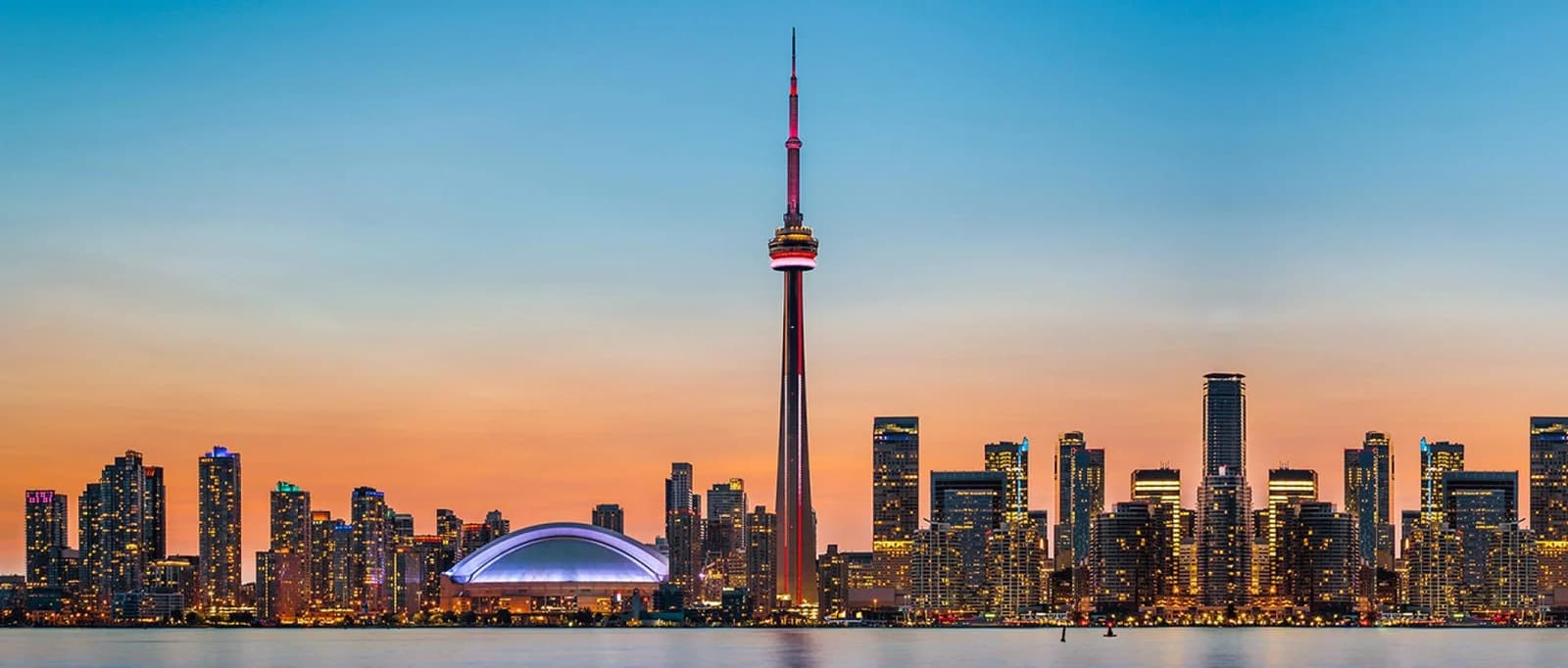
 North America destination
Canada
Study, work and settle in one of the world's most welcoming immigration systems.
Overview
Canada runs the most transparent immigration system in the world, and that is exactly why it sits at the top of the list for Indian applicants. Express Entry draws publish their cut-off scores openly, Provincial Nominee Programs list their in-demand occupations in plain language, and study permit rules are written down in detail. You rarely have to guess where you stand. With over 1.4 million people of Indian origin already living there, new arrivals land in cities where Indian groceries, temples and community groups are part of everyday life.
For students, the draw is straightforward. Public colleges and universities across Ontario, British Columbia and the Atlantic provinces offer two and three year programs with a clear route to a Post-Graduation Work Permit afterwards. That permit lets graduates work for any employer in Canada, and the work experience they gain feeds directly back into a permanent residence application. Tuition for international students usually sits between CAD 15,000 and CAD 35,000 per year depending on the program, and part-time work rights help offset living costs.
Working professionals come through a different door. Employers in healthcare, technology, skilled trades and logistics sponsor foreign workers regularly, and several provinces run draws aimed specifically at candidates with experience in those fields. Families are part of the picture too: spouses of students and skilled workers can usually get open work permits, and dependent children attend public school. Processing times move with demand, so early preparation of documents makes a real difference to how smoothly a file goes.
1.4M+
People of Indian origin living in Canada (approx.)
CAD 20,635
Minimum proof of funds for a single study permit applicant (2024 figure)
3 years
Maximum Post-Graduation Work Permit length after eligible programs
Opportunities
Where Canada makes sense for Indians
Study at public colleges and universities
Two and three year diploma and degree programs across Ontario, BC and the Atlantic provinces, many with co-op terms that place students with real employers before they graduate.
Work in healthcare, tech and skilled trades
Provinces regularly invite nurses, software professionals, electricians, welders and truck drivers through targeted PNP draws, often with lower score requirements than the federal pool.
Settle permanently through Express Entry or a PNP
Canadian work or study experience counts heavily toward permanent residence, and provincial nomination adds a decisive 600 points to an Express Entry profile.
Bring your family along
Spouses of full-time students and skilled workers are generally eligible for open work permits, and dependent children can attend public schools without international fees.
Visa routes
Visa categories we handle for Canada
Express Entry (FSW, CEC, FST)
The federal points-based system for skilled workers. Profiles are ranked on age, education, language scores and work experience, and the highest-ranked candidates receive invitations to apply for permanent residence.
Provincial Nominee Program (PNP)
Each province selects immigrants for its own labour needs. A provincial nomination adds 600 CRS points, which makes an invitation in a subsequent Express Entry draw very likely, though invitations always remain subject to draw rules and the final decision of the immigration authorities.
Study Permit
Required for programs longer than six months at a designated learning institution. Applicants must show an acceptance letter, proof of funds and ties to their home country.
Post-Graduation Work Permit (PGWP)
An open work permit for graduates of eligible Canadian programs, issued for up to three years depending on the length of study. No job offer is needed to apply.
Visitor Visa (TRV)
For tourism, family visits and short business trips. Strong travel history and clear ties to India improve the odds of approval.
Spousal Open Work Permit
Allows the spouse or common-law partner of a student or skilled worker to work for any employer in Canada while the principal applicant studies or works.
Study in Canada
Universities, costs and SOP guidance
Real universities with official links, rough tuition figures marked approx., and statement-of-purpose advice shaped for Canada.
Universities to know
Popular courses
Rough study costs
Bachelor’s · per year
CAD 25,000 – 60,000 per year (approx.)
Master’s · per year
CAD 18,000 – 45,000 per year (approx.)
A single study permit applicant must show around CAD 20,635 per year for living costs on top of tuition; Toronto and Vancouver rents run higher than smaller cities (approx.).
Essay & SOP guidance
- Canadian officers look for a genuine student. Tie the chosen program to your previous studies or work experience so the academic progression reads naturally.
- Explain why Canada and why this institution specifically: name the program, its co-op or research options, and how it fits your career plan back home.
- Be upfront about funding. State who is paying, where the money comes from, and reference the GIC or bank statements that support it.
- Keep the statement of purpose academic, not immigration-focused. Generic lines about wanting to settle in Canada raise questions rather than answering them.
- End with a clear career plan connected to your home country, showing what the Canadian qualification lets you do next.

Life in Canada
Beyond the visa: settling in
A visa gets you to Canada. Our pre-departure briefings cover the rest: the practical groundwork of your first month, explained before you board.
- Housing: what to arrange before you fly and what to sort after landing
- Money: forex, international cards and opening a local bank account
- Health cover and insurance requirements for your visa type
- Local essentials: transport, connectivity and emergency contacts
Eligibility
What you generally need
- Language test scores: IELTS General usually around 7.0+ in each band for competitive Express Entry profiles; IELTS Academic around 6.0 to 6.5 overall for most college admissions.
- Education: a bachelor's degree or three-year diploma for skilled worker routes; an Educational Credential Assessment (ECA) from WES or a similar body is required to claim points for foreign education.
- Proof of funds: usually around CAD 14,000 to CAD 15,000 for a single Express Entry applicant, and about CAD 20,635 per year for a single study permit applicant under the 2024 requirement, plus tuition.
- Work experience: at least one year of continuous skilled work in the last ten years for the Federal Skilled Worker stream, documented with reference letters and pay slips.
- Health and character: a medical exam by a panel physician and police clearance certificates from India and any country where you have lived for six months or more.
- Admission offer: a letter of acceptance from a Designated Learning Institution is mandatory before a study permit can be filed.
Process
How we take your file forward
Profile assessment
We review your education, work history, language scores and funds against current Express Entry cut-offs, PNP occupation lists or college admission requirements, and tell you honestly which routes are realistic.
Language test and credential evaluation
We set a target band for IELTS or PTE based on your route, share preparation resources, and start your ECA with WES or CES so the evaluation is ready when you need it.
Documentation and funds preparation
Reference letters, bank statements, GIC arrangement for students, police clearances and medicals are compiled in the exact formats officers expect, which is where most self-filed applications stumble.
Application filing
Your Express Entry profile, PNP application, study permit or visa file is prepared and submitted with a complete document checklist. The final decision always rests with the Canadian immigration officer; our role is to make the file as strong and complete as possible.
Interview and biometrics guidance
Most Canada applications need biometrics at a VAC. If an interview is requested, we run a practice session covering the questions officers actually ask.
Pre-departure briefing
Accommodation, SIN number, banking, health insurance and what to carry in hand luggage. Students also get a session on part-time work rules and PGWP conditions so nothing jeopardises their status later.
FAQ
Canada, answered
Processing times move with the season. Files lodged well before the September intake, usually by April or May, tend to move faster. During peak months it can stretch to several weeks or a couple of months, which is why we advise applying as soon as the acceptance letter and funds are in place.
A realistic budget for a study permit route is roughly Rs. 12 to Rs. 20 lakh for the first year, covering tuition of CAD 15,000 to 35,000, the GIC of about CAD 20,635, plus visa fees, biometrics, medicals and airfare. PR routes through Express Entry cost far less in government fees but need the language tests and ECA, roughly Rs. 50,000 to Rs. 80,000 in third-party costs.
Yes, in most cases. Spouses of full-time students and skilled workers can apply for open work permits, and dependent children can study at public schools. Each family member needs their own application, and the funds requirement rises with family size.
A refusal is not the end of the road. We obtain the officer's notes, identify the weak point, usually funds documentation or purpose of visit, and refile with the gap addressed. Approval is never guaranteed by any consultant; it is the officer's decision alone, and honest files filed twice often succeed.
No. A valid job offer adds points but is not mandatory. Many Indian applicants receive invitations based on age, education, language scores and skilled work experience alone, especially when a provincial nomination is in play.

Free initial consultation
Canada on your mind? Let's check your eligibility.
A free consultation reviews your profile against Canada's actual requirements and tells you honestly where you stand. No obligation, no sales pitch.