
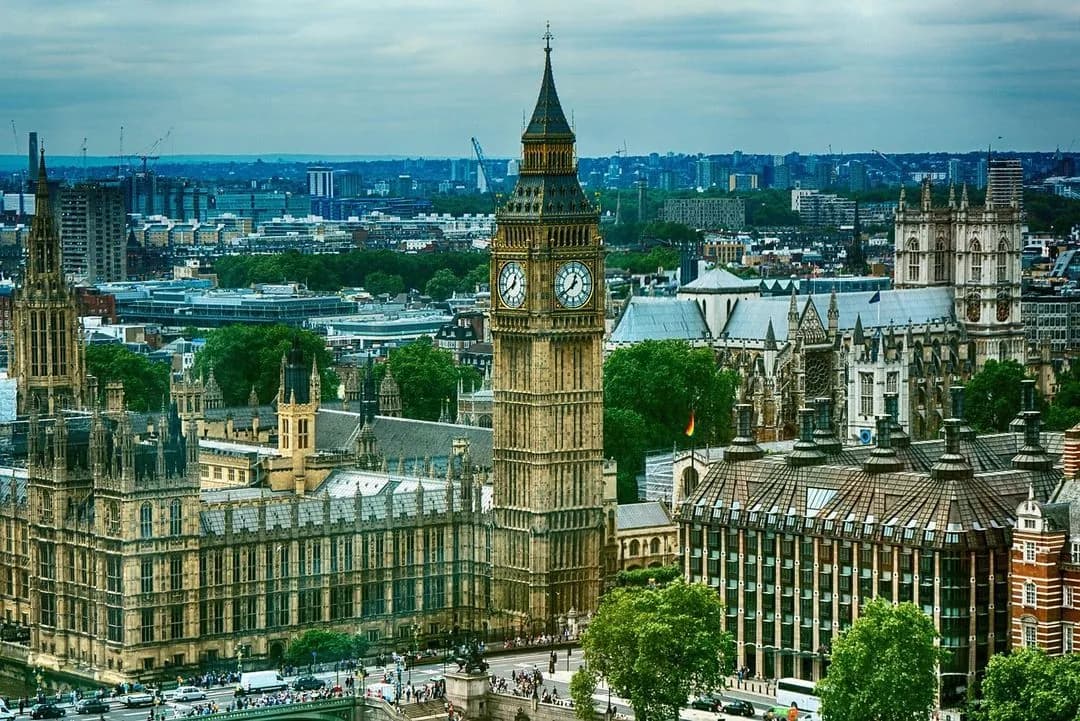
 Europe destination
United Kingdom
World-class universities, a two-year post-study work visa, and clear skilled worker routes.
Overview
Ask an Indian student to name a study destination and the UK still comes up in the first breath. Part of it is history and language: English-medium education, familiar legal and academic traditions, and universities whose names carry weight with employers back home. Part of it is policy. The Graduate visa lets international students stay and work for two years after their degree, three for PhD graduates, with no sponsorship required. That single rule changed the calculation for thousands of families.
Beyond the lecture halls, the UK runs a structured work migration system. The Skilled Worker visa ties a migrant to a licensed sponsoring employer, and the Health and Care Worker visa has brought large numbers of Indian nurses and care staff into the NHS. Salary thresholds were raised in recent years, so the offer letter matters more than it used to, and applicants need to check that the role and pay meet the current minimums before counting on a route.
London gets the headlines, but the story is wider. Manchester, Birmingham, Leeds, Glasgow and Edinburgh all have growing Indian communities, lower living costs than the capital, and universities actively recruiting international students. Business visitors use the Standard Visitor route for meetings and conferences, and the UK's position as a finance and services hub keeps short-term travel demand steady year-round.
2 years
Graduate visa stay-back period after a UK degree (approx.)
GBP 1,334/mo
Living cost proof required for study in London (approx.)
1M+
People of Indian origin in the UK, one of the largest diasporas (approx.)
Opportunities
Where United Kingdom makes sense for Indians
One-year master's degrees with post-study work rights
UK master's programs typically run twelve months, and the Graduate visa then allows two years of unsponsored work, a combination few other countries match for total time and cost.
NHS and care sector employment
The Health and Care Worker visa offers reduced fees and an exemption from the immigration health surcharge, making the UK one of the most accessible destinations for Indian nurses and care workers.
Skilled roles in tech, finance and engineering
London and regional tech clusters sponsor software engineers, data professionals and engineers, though applicants should verify the role meets the current salary threshold.
Short business and family visits
The Standard Visitor visa covers tourism, family visits and business meetings, with six-month stays standard and longer-term multiple-entry options for frequent travellers.
Visa routes
Visa categories we handle for United Kingdom
Student visa
For degree-level study at a licensed sponsor institution. Applicants need a Confirmation of Acceptance for Studies (CAS), proof of funds for tuition plus living costs, and English at the required level.
Graduate visa
A two-year unsponsored work visa for graduates of UK bachelor's and master's degrees, three years for PhD graduates. No job offer or sponsorship is needed, and any work is permitted.
Skilled Worker visa
For sponsored employment with a licensed UK employer in an eligible occupation. The role must meet skill and salary thresholds, and English language ability must be demonstrated.
Health and Care Worker visa
A dedicated route for qualified doctors, nurses, care workers and allied health professionals with a job offer from the NHS or an approved care provider, with lower fees than the standard Skilled Worker route.
Standard Visitor visa
Covers tourism, visiting family, business meetings and short courses up to six months. Applicants must show they will leave at the end of the visit and can support themselves.
Spouse / Partner visa
For partners of British citizens or settled persons. The financial requirement is significant and must be documented carefully, usually through employment income or savings.
Study in United Kingdom
Universities, costs and SOP guidance
Real universities with official links, rough tuition figures marked approx., and statement-of-purpose advice shaped for United Kingdom.
Universities to know
Popular courses
Rough study costs
Bachelor’s · per year
GBP 15,000 – 38,000 per year (approx.)
Master’s · per year
GBP 16,000 – 45,000 per year (approx.)
The student visa requires proof of around GBP 1,334 per month for London or GBP 1,023 per month elsewhere, on top of tuition (approx.).
Essay & SOP guidance
- Undergraduate applicants write a UCAS personal statement capped at 4,000 characters: focus on why this subject, with evidence from school projects, reading or work experience.
- Postgraduate statements go directly to the university. Name the course, specific modules and how they fill the gaps in your current profile.
- Show subject fit rather than prestige. Admissions tutors respond to evidence of academic curiosity in the discipline, not praise of the university's ranking.
- Address funding briefly: confirm how tuition and living costs will be covered so the visa-stage finances do not raise questions later.
- Keep each statement course-specific. A generic essay reused across different programs is easy to spot and weakens every application.
Life in United Kingdom
Beyond the visa: settling in
A visa gets you to United Kingdom. Our pre-departure briefings cover the rest: the practical groundwork of your first month, explained before you board.
- Housing: what to arrange before you fly and what to sort after landing
- Money: forex, international cards and opening a local bank account
- Health cover and insurance requirements for your visa type
- Local essentials: transport, connectivity and emergency contacts
Eligibility
What you generally need
- English language: IELTS for UKVI usually around 6.0 to 6.5 overall for degree study; Skilled Worker applicants need CEFR B1 level, roughly IELTS 4.0 to 5.0 in each component.
- Funds for study: tuition plus living costs, usually around GBP 1,334 per month for London and GBP 1,023 per month outside London, held for 28 consecutive days.
- Skilled Worker salary: the role must meet the current minimum salary threshold, which was raised in recent years, so the exact figure should be checked against the latest rules for your occupation code.
- CAS from a licensed sponsor: universities issue this only after academic and financial checks, and it carries a unique reference number for the visa application.
- Tuberculosis test: applicants resident in India need a TB certificate from an approved clinic, valid for six months.
- Health and character: the immigration health surcharge applies to most long-term routes, and criminal record checks are required for certain occupations like healthcare and education.
Process
How we take your file forward
Route mapping
Student, skilled worker or family route: we assess your qualifications, budget and timeline against current UK rules and recommend the path with the strongest chance, including backup options.
University or employer shortlisting
For students, we shortlist licensed sponsors that fit your profile and budget and manage the application and CAS process. For workers, we review your offer letter and sponsorship details before anything is filed.
Funds and document preparation
The 28-day fund maintenance rule trips up many applicants. We build a document calendar so bank statements, TB certificates and English test results are all valid on the day of filing.
Visa application and biometrics
The online application, fee and surcharge payments, and the VFS appointment are handled end to end. UKVI caseworkers make the final decision; we make sure they see a complete, well-ordered file.
Credibility interview preparation
UKVI sometimes interviews student applicants about their course choice and plans. We run mock sessions so answers are specific and consistent with the application.
Pre-departure and arrival support
BRP collection, GP registration, National Insurance number, opening a bank account and understanding work-hour limits during term time are all covered before you fly.
FAQ
United Kingdom, answered
Most straightforward applications are decided within three weeks of the biometrics appointment. Priority services can shorten this where available, but during the July to September rush even priority slots fill fast, so early filing matters.
Tuition for international master's programs usually ranges from GBP 14,000 to GBP 30,000, with London universities at the higher end. Adding living costs, the immigration health surcharge and visa fees, families should budget roughly Rs. 28 to Rs. 50 lakh for the year, varying widely by city and university.
Yes. The Graduate visa gives two years of unsponsored work rights after a bachelor's or master's, three after a PhD. Many graduates use this period to secure sponsored Skilled Worker roles, which can lead toward settlement.
It depends on your profile. Higher salary thresholds make the Skilled Worker route harder for entry-level roles, but students, healthcare workers and experienced professionals in shortage areas still have strong options. We assess this honestly before taking a case.
Postgraduate students and skilled workers can generally bring dependants, though recent rule changes restricted dependants for some student categories. We check the current position for your specific route before advising.



Free initial consultation
United Kingdom on your mind? Let's check your eligibility.
A free consultation reviews your profile against United Kingdom's actual requirements and tells you honestly where you stand. No obligation, no sales pitch.